In the beginning, God created the heavens and the earth in seven days. This incredible act of divine creation not only laid the foundation for our existence but also bestowed upon us everything we need for our well-being. From the vastness of the cosmos to the intricate details of the natural world, each aspect of creation holds profound significance for our physical, emotional, and spiritual health. In this blog post, we will explore how God’s seven days of creation provide everything we need to flourish and lead a fulfilling life.
1. Day 1 – Light and Darkness:
On the first day, God said, “Let there be light,” and there was light. Light represents not only physical illumination but also the clarity and understanding that come with knowledge. In our lives, knowledge and awareness are essential for making informed decisions about our well-being, be it in nutrition, exercise, or mental health. God’s gift of light enables us to see the path to wellness more clearly.
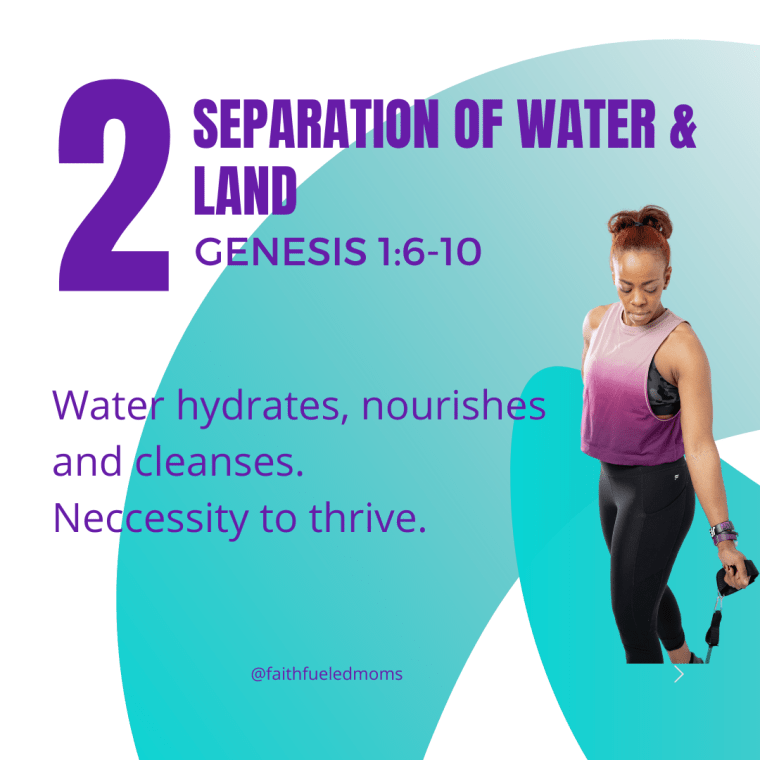
2. Day 2 – Separation and Balance:
God created the expanse to separate the waters, forming the sky. This division reflects the importance of balance in our lives. As we navigate the complexities of modern living, maintaining a balance between work, rest, and recreation is crucial for our overall well-being. Just as God established a clear separation, we too must distinguish and prioritize various aspects of our lives to thrive.
3. Day 3 – Nourishment and Growth:
On the third day, God brought forth vegetation, plants, and fruits. These provide nourishment for both humans and animals, sustaining life and promoting growth. Nutrition is fundamental to our well-being, and God’s provision of a variety of plants and fruits offers us a diverse and balanced diet. By embracing this bounty, we can nurture our bodies and promote good health.
4. Day 4 – Rhythm and Rest:
The fourth day marked the creation of the sun, moon, and stars. The celestial bodies govern day and night, establishing a natural rhythm for life. In a world where we are often consumed by busyness, God’s creation of day and night reminds us of the importance of rest. Embracing a regular sleep pattern and taking time to rest allows our bodies and minds to rejuvenate, fostering optimal well-being.
5. Day 5 – Movement and Vitality:
God filled the seas and skies with living creatures on the fifth day. This act of creation emphasizes the importance of movement and vitality. Exercise and physical activity are vital components of well-being, promoting cardiovascular health, strength, and flexibility. Just as the creatures of the sea and sky move with grace, we too should embrace movement to nurture our bodies.
6. Day 6 – Connection and Community:
On the sixth day, God created animals and humankind. This day represents the significance of connection and community in our lives. Social relationships and a sense of belonging are essential for mental and emotional well-being. Nurturing healthy connections with others enables us to find support, share experiences, and experience the joy of companionship.
7. Day 7 – Rest and Reflection:
The seventh day was a day of rest, where God ceased His work and admired His creation. This day symbolizes the importance of rest and reflection in our lives. Taking time to rest not only rejuvenates us but also allows us to appreciate the wonders of God’s creation. By pausing to reflect on our journey to well-being, we can find gratitude and contentment in God’s provision.
God’s creation provides well being
As we reflect on the seven days of creation, we can marvel at the profound ways in which God has given us everything we need to be well. From the light that illuminates our path to the importance of balance, nourishment, and movement, each element plays a crucial role in our physical, emotional, and spiritual health. By embracing the wisdom inherent in God’s creation, we can lead fulfilling lives, appreciating the divine gifts bestowed upon us and nurturing our well-being in harmony with God’s grand design.
I am a #NOWWellness Influencer. In this post, I have included an affiliate link in this post that I receive a commission from purchases, and I am compensated for my post. All my opinions are my own. My full disclosure policy
In our quest for a healthier lifestyle, many of us aspire to boost our metabolism. A well-functioning metabolism plays a crucial role in maintaining weight, energy levels, and overall well-being. While exercise and regular physical activity are essential, it’s equally important to focus on our diet. Let’s explore a variety of foods that can naturally boost your metabolism and promote overall health. From chili peppers and coffee to nuts and green tea, incorporating these superfoods into your diet can be a game-changer for achieving your health goals. God gave us all that we need to nourish our bodies well through foods that boost metabolism. Check out my post on 100 Healing Foods
If you’re a fan of fiery flavors, you’re in for a treat! Chili peppers contain capsaicin, a compound that not only gives them their spicy kick but also stimulates your metabolism. Research suggests that capsaicin can increase your body’s energy expenditure and fat oxidation, leading to a temporary boost in metabolism.1
Coffee: Kickstart Your Morning
For many, a cup of coffee is the perfect way to start the day. Besides its ability to wake you up, coffee can also help boost your metabolism. The caffeine content in coffee stimulates your central nervous system, promoting the release of fat cells into the bloodstream to be used as fuel. Coffee can increase thermogenesis, the process by which your body burns calories to produce heat.
Nuts: A Nutritional Powerhouse
Nuts, such as almonds, walnuts, and cashews, are not only delicious but also packed with essential nutrients. These nutrient-dense foods are rich in protein, healthy fats, and fiber, making them an excellent choice for foods that boost metabolism The combination of protein and healthy fats in nuts helps stabilize blood sugar levels, keeping you feeling satisfied and preventing overeating. You can grab your nuts at nowfoods.com use code FAITHFUELED for 20% off discount.
Tea: Sip Your Way to a Faster Metabolism
Tea, especially green tea, has long been revered for its health benefits. Green tea contains catechins, which are antioxidants that can promote fat oxidation and increase calorie burning. Additionally, the modest caffeine content in tea can provide a gentle metabolic boost without the jitters often associated with high caffeine intake.
Balance Hormones with Broccoli and Kale
Hormonal imbalances can negatively affect your metabolism. Incorporating cruciferous vegetables like broccoli and kale into your diet can help balance hormones naturally. These vegetables contain compounds that support detoxification processes in the liver, helping your body maintain optimal hormone levels and supporting a healthy metabolism.
Extra Virgin Olive Oil (EVOO): A Healthy Fat
While it may seem counterintuitive, consuming healthy fats can actually boost your metabolism. Extra virgin olive oil (EVOO) is a prime example of a healthy fat that provides numerous health benefits. The monounsaturated fats in EVOO have been linked to increased metabolic rate, improved insulin sensitivity, and enhanced satiety, all of which contribute to a healthier metabolism.
Turmeric: Spice Up Your Health
Turmeric, a vibrant yellow spice commonly used in curry dishes, contains an active compound called curcumin. Curcumin has been shown to have anti-inflammatory properties and may help boost metabolism by enhancing fat burning and reducing fat accumulation in the body. Incorporating turmeric into your meals or enjoying a cup of turmeric tea can offer these metabolic benefits.
Pomegranate and Quinoa: A Nutrient-Rich Combo
Pomegranate and quinoa are two superfoods that can help boost your metabolism and provide a wide range of nutrients. This super fruit is rich in antioxidants, which can reduce inflammation and support a healthy metabolism. Quinoa, on the other hand, is a complete protein that can help increase your metabolic rate due to its high thermic effect.
Salmon and Soy: Protein Powerhouses
Protein plays a vital role in increasing your metabolism. Foods like salmon and soy are excellent sources of high-quality protein. Salmon is rich in omega-3 fatty acids, which can reduce inflammation and promote a healthy metabolism. Soy products like tofu and edamame are not only packed with protein but also contain compounds that can support hormone balance and metabolic health.
Supreme Super Foods: Avocados, Cinnamon, Flaxseed, and Ginger
Avocados, cinnamon, flaxseed, and ginger are four supreme superfoods that deserve a special mention for their metabolism-boosting properties. Avocados provide healthy monounsaturated fats and fiber, which help regulate metabolism and promote satiety. Cinnamon has been shown to improve insulin sensitivity and regulate blood sugar levels, which are crucial for a healthy metabolism. Flaxseed contains omega-3 fatty acids and fiber, both of which contribute to a faster metabolism. Lastly, ginger can increase calorie burning and improve digestion, supporting overall metabolic function.
Salmon and Tomatoes: Enhancing Skin Health
Looking for ways to reduce inflammation and achieve younger-looking, healthy skin? Incorporate salmon and tomatoes into your diet. Salmon, as mentioned earlier, is rich in omega-3 fatty acids, which can reduce inflammation and promote skin health. Tomatoes, on the other hand, are packed with antioxidants like lycopene, which can protect the skin from damage caused by free radicals and sun exposure.
Kick-start your metabolism and support overall health with food.
Boosting your metabolism naturally doesn’t have to be a daunting task. By incorporating these foods that boost metabolism into your diet, such as chili peppers, coffee, nuts, tea, broccoli, EVOO, green tea, salmon, turmeric, pomegranate, quinoa, soy, and other superfoods, you can kick-start your metabolism and support overall health. Remember, maintaining a balanced and varied diet, coupled with regular exercise, is key to achieving and sustaining a healthy metabolism. So go ahead and embrace these delicious foods that can transform your metabolism and improve your well-being!
Reference:
INOUE, N., MATSUNAGA, Y., SATOH, H., & TAKAHASHI, M. (2007, February 23). Enhanced energy expenditure and fat oxidation in humans with high BMI scores by the ingestion of novel and non-pungent capsaicin analogues (capsinoids). Bioscience, Biotechnology, and Biochemistry. https://www.jstage.jst.go.jp/article/bbb/71/2/71_60341/_article/-char/ja/
Core exercise for lower back pain can be helpful if you suffer from low back pain. Lower back pain is a common issue that affects numerous individuals, impacting their daily lives and overall well-being;. According to Georgetown University McCourt School of Public Policy, “Some 16 million adults — 8 percent of all adults — experience persistent or chronic back pain, and as a result, are limited in certain everyday activities.”1
One practical approach to managing and alleviating lower back pain is through targeted core exercises. Strengthening the core muscles helps provide stability and support to the spine, reducing the strain on the lower back. I will share seven highly practical core exercises specifically designed to alleviate lower back pain. These exercises are carefully selected to provide maximum benefits, by incorporating these exercises into your fitness routine:
you can strengthen your core
support your back,
and experience relief from lower back pain.
Dead Bug
The dead bug exercise is an effective way to strengthen the core while maintaining a stable and neutral spine. Performing the Dead Bug exercise can be beneficial for individuals with low back pain. This exercise specifically targets the core muscles while simultaneously promoting stability and coordination. The dead bug is beneficial in so many ways.
1. Core Muscle Activation:
The Dead Bug exercise primarily targets the deep core muscles, including:
the transverse abdominis (deep abdominal muscles)
the multifidus (deep spinal muscles).
These muscles play a crucial role in stabilizing the spine and providing support during movement. Weakness or imbalances in these muscles can contribute to low back pain. By performing the Dead Bug exercise, you activate and strengthen these deep core muscles, enhancing their ability to stabilize the spine and reduce low back pain.
2. Spinal Stability
Low back pain often occurs due to poor spinal stability, which can result from weak core muscles. The Dead Bug exercise is designed to improve spinal stability by challenging your ability to maintain a neutral spine position while moving your arms and legs. This exercise teaches you how to engage your core muscles to prevent excessive arching or rounding of the back during movement. By enhancing spinal stability, the Dead Bug exercise helps reduce stress on the low back and alleviate pain.
3. Anti-Extension and Anti-Rotation Training:
The Dead Bug exercise is considered an anti-extension and anti-rotation exercise. It trains your core muscles to resist excessive arching of the lower back (extension) and twisting or rotation of the spine. These movements can be harmful if not properly controlled, leading to low back strain or injury. By practicing the Dead Bug exercise, you strengthen the core muscles responsible for resisting these potentially harmful movements, providing stability and protection to the low back.
Anti-extension exercises are designed to help you maintain a stable and strong core to prevent your lower back from arching too much or sagging excessively. In everyday life, anti-extension comes into play when you need to resist bending backward or overarching your lower back. For example, When you lift a heavy box off the ground, you engage your core muscles to prevent your lower back from excessively arching, keeping it stable and protected. Anti-extension is also used, While pushing a heavy object, like a stuck car, your core muscles work to maintain a neutral spine position and prevent your lower back from hyperextending.
*Performing planks: Planks are a common exercise that strengthens the core and promotes anti-extension. By maintaining a rigid and stable body position, you prevent your lower back from sagging or dipping during the exercise. (See Below)
Anti-rotation exercises aim to enhance core stability and control by resisting twisting or rotation of the spine. These exercises help you maintain proper alignment and protect your spine from excessive rotational forces. You use anti-rotation in everyday activities while carrying groceries. When you carry heavy grocery bags in one hand, your core muscles engage to resist rotation and keep your torso stable. This helps you maintain an upright position and prevent strain on your low back.
In golf, generating power and accuracy relies on a stable core and controlled rotation. Anti-rotation exercises help train the core muscles to resist excessive twisting during the swing, leading to better performance and reducing the risk of back injuries. Another example is when you hold a baby on one hip, your core muscles activate to resist rotation and maintain balance. This helps you keep an upright posture and protects your spine from strain.
By incorporating anti-extension and anti-rotation exercises into your fitness routine, you can strengthen your core muscles and improve their ability to provide stability and support to your spine. This, in turn, can help prevent low back pain and reduce the risk of injury during various daily activities.
4. Muscle Coordination and Motor Control:
The Dead Bug exercise involves coordinated movement of the arms and legs while maintaining a stable core. This exercise challenges your ability to coordinate different muscle groups and promotes better motor control. By improving muscle coordination, you enhance the efficiency of movement and reduce the risk of compensatory patterns that may strain the low back.
5. Improved Posture:
Weak core muscles can contribute to poor posture, which can lead to low back pain. The Dead Bug exercise targets the deep core muscles responsible for maintaining proper spinal alignment. By strengthening these muscles, the exercise promotes better posture, reducing the strain on the low back and alleviating pain.
6. Low-Impact Exercise:
The Dead Bug exercise is a low-impact exercise and a great way to begin strengthening your core that minimizes stress on the low back. It doesn’t involve heavy loads or excessive spinal flexion or extension, making it a safe option for individuals with low back pain or those with restrictions on certain movements. It’s important to perform the Dead Bug exercise with proper form and technique to maximize its benefits and minimize the risk of injury. If you have existing back pain or any underlying conditions, it’s recommended to consult with a healthcare professional or a qualified fitness expert like myself. I am a NASM-certified Corrective Exercise Specialist and can provide personalized guidance based on your specific needs and help you determine the most appropriate exercises for your condition.
Perform a Dead Bug
Begin by lying on your back with your arms extended toward the ceiling and your knees bent at a 90-degree angle. Engage your core by gently pressing your lower back into the floor. Slowly lower your right arm and left leg towards the ground, maintaining control without arching your back. Return to the starting position and repeat with the opposite arm and leg. The dead bug exercise targets the deep abdominal muscles, improves coordination, and enhances spinal stability.
Plank
The plank is a fundamental core exercise that engages multiple muscles, including the abdominals, back, shoulders, and glutes. Performing planks can be an effective exercise for strengthening the core muscles and potentially alleviating low back pain. There are many reasons planks are beneficial in alleviating low back pain:
1. Core Muscle Strengthening:
Planks primarily target the muscles in your core, including:
the rectus abdominis (the “six-pack” muscles)
transverse abdominis
obliques
erector spinae (muscles along the spine). You create a stable and supportive foundation for your spine by engaging and strengthening these muscles.
2. Spinal Stability:
Low back pain is often associated with poor spinal stability, which can be caused by weak core muscles. The core muscles play a crucial role in stabilizing the spine during movement and maintaining proper posture. When the core muscles are weak, the load and stress on the low back increase, leading to pain and potential injury. Performing planks challenge the core muscles to maintain stability throughout the exercise, helping to improve spinal alignment and reduce stress on the lower back.
3. Improved Posture:
Weak core muscles can contribute to poor posture, which can strain the muscles and ligaments in the low back. Planks promote good posture by strengthening the muscles responsible for maintaining an upright position but performed horizontally. When the core muscles are strong, they can better support the spine and prevent excessive rounding or arching of the back, reducing the risk of low back pain.
4. Increased Spinal Endurance:
Endurance is an important aspect of spinal health, especially for individuals who spend long hours sitting or engaging in activities that place prolonged stress on the back. Planks require maintaining an isometric contraction (holding the exercise without movement) for an extended period, which helps build endurance in the core and back muscles. Increased endurance allows the muscles to sustain the demands of daily activities and reduces the likelihood of experiencing low back pain due to fatigue. Performing planks consistently help build up endurance and muscle memory.
5. Joint Support and Load Distribution:
Planks also indirectly benefit the low back by promoting proper alignment and load distribution in the surrounding joints. When the core muscles are strong, they assist in stabilizing the hips, pelvis, and lumbar spine. This support helps maintain optimal joint positioning, reducing the strain on the low back during movements and activities.
6. Activation of Supporting Muscles:
Planks engage not only the core muscles but also other muscles that contribute to spinal stability. These include:
the glutes
hip flexors
shoulder girdle muscles, such as the deltoids and trapezius.
By activating and strengthening these supporting muscles, planks create a comprehensive system of support for the spine, reducing the risk of low back pain. It’s important to note that while planks can be beneficial for low back pain, they may not be suitable for everyone.
Performing a plank
Begin by assuming a push-up position with your forearms resting on the ground and elbows aligned under your shoulders. Check out my post on the importance of planks: Get Strong Series: Day 1 Plank
Engage your core muscles by drawing your navel towards your spine. Maintain a straight line from your head to your heels, avoiding any sagging or arching of the back. Hold this position for as long as you can while maintaining proper form and breathing steadily. The plank helps improve core stability, strengthen the abdominal muscles, and support a healthy spine.
Bird Dog
The bird dog exercise targets the core, lower back, and glutes while promoting stability and balance. This exercise specifically targets the core muscles, including the deep stabilizers of the spine, which can help alleviate pain and improve spinal stability. Bird Dogs are highly effective and beneficial in helping with lower back pain.
1. Core Muscle Activation:
The Bird Dog exercise primarily targets:
the transverse abdominis (deep abdominal muscles)
multifidus (deep spinal muscles)
gluteus maximus (buttocks).
These muscles are essential for stabilizing the spine and providing support during movement. When these muscles are weak, it can lead to poor spinal stability and increased stress on the low back, resulting in pain. By performing the Bird Dog exercise, you activate and strengthen these core muscles, enhancing their ability to stabilize the spine and reduce low back pain.
2. Spinal Alignment:
Low back pain can often be associated with poor spinal alignment, such as excessive arching or rounding of the back. The Bird Dog exercise encourages proper spinal alignment by promoting a neutral position. When performed correctly, it helps align the spine, reducing excessive stress on the low back and improving overall posture. It’s similar to the Dead Bug but performed in a tabletop position and a progression from the dead bug.
3. Balance and Coordination:
The Bird Dog exercise involves simultaneously extending one arm forward and the opposite leg backward while maintaining a stable core. This exercise challenges your balance and coordination, requiring the muscles in your core and back to work together synergistically. By improving balance and coordination, the Bird Dog exercise helps develop better motor control, reducing the risk of falls or movements that could strain the low back.
4. Muscle Endurance:
Building endurance in the core muscles is crucial for individuals with low back pain, especially those who experience discomfort during prolonged activities or sitting. The Bird Dog exercise is an isometric exercise (holding the exercise without movement) that requires holding the extended position for a period of time. By performing this exercise regularly, you increase the endurance of the core muscles, allowing them to support the spine for longer durations and reducing the likelihood of pain caused by muscle fatigue.
5. Functional Movement Integration:
The Bird Dog exercise mimics the movement patterns involved in daily activities and functional movements. For example, imagine you’re standing and reaching across a table to grab a book from the other side. To execute this movement safely and effectively, you would engage your core muscles to stabilize your spine and maintain balance while simultaneously extending one arm forward and the opposite leg backward, similar to the Bird Dog exercise. This coordinated movement helps improve the strength, stability, and control of the core muscles, enhancing your ability to perform daily activities with reduced risk of low back pain or injury. By practicing this exercise, you improve the coordination and strength of the core muscles in a way that translates to real-life movements. This can help reduce the risk of low back pain during activities such as lifting, bending, or twisting.
6. Minimal Spinal Compression:
The Bird Dog exercise is a low-impact exercise that minimizes compressive forces on the spine. Unlike exercises that involve spinal flexion. Spinal flexion refers to the forward bending or rounding of the spine. It occurs when you bend forward, bringing your chest closer to your thighs and your head closer to your knees. In simple terms, it is the movement that makes your back hunch or round forward.
Imagine sitting on a chair and slouching forward, with your shoulders and upper back rounded. That’s an example of spinal flexion. Similarly, when you bend forward to touch your toes, you’re also performing spinal flexion.
Spinal flexion involves the bending of the individual vertebrae in your spine, which are the small bones that make up your backbone. These bones are connected by flexible discs and supported by ligaments and muscles.
While spinal flexion is a normal and necessary movement for certain activities, such as bending down to pick up objects from the ground, excessive or repetitive flexion can sometimes lead to strain or injury. It’s important to maintain proper posture and use caution when performing activities that involve significant spinal flexion, especially if you have a history of back problems or low back pain.
Bird Dogs don’t require heavy loads, the Bird Dog exercise is relatively gentle on the low back. This makes it a suitable exercise option for individuals with low back pain or those who may have restrictions on activities that compress the spine. It’s important to perform the Bird Dog exercise with proper form and technique to maximize its benefits and minimize the risk of injury.
Perform a Bird Dog
Begin on your hands and knees, with your hands directly under your shoulders and your knees under your hips. Keep your spine neutral and engage your core muscles. Slowly extend your right arm forward while simultaneously extending your left leg backward, maintaining a straight line from your fingertips to your toes. Hold this position for a few seconds, then return to the starting position and repeat with the opposite arm and leg. The bird dog exercise strengthens the deep core muscles, improves spinal stability, and enhances overall body control.
Top 3 core exercises to help lower back pain
Incorporating these three core exercises into your fitness routine daily can significantly contribute to reducing lower back pain, improving core stability, and supporting a healthier spine. Remember to prioritize proper form, start with suitable modifications if needed, and progress gradually as your strength increases. However, if you’re experiencing chronic or severe lower back pain, it’s crucial to consult with a healthcare professional. Strengthen your core, alleviate your lower back pain, and embark on a journey to a healthier and more active lifestyle.
Reference:
Chronic back pain. Health Policy Institute. (2019, February 13). https://hpi.georgetown.edu/backpain/#:~:text=Some%2016%20million%20adults%20%E2%80%94%208,limited%20in%20certain%20everyday%20activities.
When Mimi was a baby she signed, which is an excellent way to communicate her needs. Two of my daughters signed (my middle one refused). Our signing girls during infancy/toddlerhood whined less than my middle who refused.
When we woke up in the morning after our good morning kisses, my baby would sign “milk.” I usually reply “Wait” (in sign) at which she began to get anxious. Continually signing milk, waving her arms, kicking her feet. She knows it is coming, but she wants it NOW! Once she gets it, she is satisfied and content.
No Patience
Now, my baby is also a “healthy eater,” horrible sleeper, but more than makes up for it in food consumption. When she was younger she would sign “eat,” and I respond “wait” her reaction is entirely different than when she wants milk.
Mimi would proceed to fall out on the ground and have a tantrum. Crying, yelling, signing till I put her in the high chair and fed her.
Waiting without God
Waiting without God and waiting with God. I have found similarities with my one-year old’s patience. When I first found Christ, I would wait without God. Praying for things and anxiously waiting for God to answer; similarly to my toddler when I tell her to wait. Sometimes, I would have a full out tantrum because things weren’t happening in my time or how I wanted them.
I can Help God Mentality
Then I progressed in my faith and became like my middle daughter, Lailah. When I tell her to wait for something, she’ll take it upon herself to do it on her own. Calling herself “helping” me out usually ending up in a spill, break or simply a mess. I have “helped’ out God quite a few times resulting in nothing that I wanted or a long messy drawn out way to it.
Waiting with God
As a believer and an adult. I wait differently than I did when I first came into my faith. I have found Scripture to guide me; yet, still, work in progress. I still need to work on my execution.
Similarly to my oldest daughter; when she asks me for something, and I say “wait.” She will wait for a while to come back to me and “remind” or ask me again. Then, if I still haven’t done it, she will ask if she can help me and wait a little longer. Thanking me once I execute my task because of our fourteen years together she has gained trust in me and knew that I would get to it when I can.
4 Ways Scriptures Shows us to Wait
Like my relationship with all my daughters; I have learned to wait with God as I have matured in my faith. As I have grown, I have found that I need several things for me to have patience, hope, and trust that the Lord will answer my prayers. I may not like the answer, but I will receive a reply nonetheless in due time.
1. Wait
When waiting with the Lord, you have to have trust and confidence that He will answer you as well as stay close by His side so that you are ready when it is time. (Kind of like my twelve years old)
Psalm 33:20-22 (NIV) 20 We wait in hope for the Lord; he is our help and our shield.21 In him our hearts rejoice, for we trust in his holy name. 22 May your unfailing love be with us, Lord, even as we put our hope in you.
This verse to me is a proven process of what is needed to wait for the Lord.
2. Help
I look to God for his help in trouble instead of offering my “help.”
Psalm 46:1(NIV) God is our refuge and strength, an ever-present help in trouble.
3. Rejoice
Instead of fretting; I rejoice no matter what. I am grateful to turn to and to help me in need. I just need to come to Him, be grateful to Him and wait for Him to take action.
1 Thessalonians 5:16-1816 Rejoice always,17 pray continually,18 give thanks in all circumstances; for this is God’s will for you in Christ Jesus.
4. Trust
Something that I learned and continued to grow in is trusting in the Lord. How He does things because it’s usually different from my own but always so much better than anything that I could do for myself.
Proverbs 3:5 (NIV) 5 Trust in the Lord with all your heart and lean not on your own understanding;
When facing financial constraints, finding ways to feed your family nutritious meals is crucial while adhering to specific dietary requirements. In this blog post, I’ll explore how to create a meal plan for a family of five with a weekly budget of $150.This meal plan is for a family that is gluten-free but can be adapted to fit your family’s needs. With strategic planning, budget-friendly recipes, and shopping strategies, you can prioritize your family’s health while navigating through a recession without compromising taste or nutrition.
Here are some basic guidelines when meal planning with a budget.
1. Plan Ahead and Set a Budget
To eat healthy on a budget, plan your meals and establish a realistic budget. Consider the dietary needs of your family and allocate funds accordingly. With a budget, you can make informed decisions while grocery shopping and avoid overspending.
2. Embrace Meal Planning
Meal planning is a powerful tool for saving time and money and ensuring balanced meals. Dedicate some time each week to plan your meals and create a shopping list based on the gluten-free and low-carb ingredients you’ll need. This approach minimizes food waste and maximizes the use of ingredients throughout the week. When I started my journey, meal planning, and prepping was a daunting chore, but years later, it has been helpful in managing my budget and making meal time easy throughout the week. Affording me less time in the kitchen and the ability to be prepared each night. Check out my post on meal prepping.
3. Shop Strategically and Compare Prices
When shopping on a tight budget, it’s essential to be strategic. Compare prices at different stores, take advantage of sales, and consider purchasing store-brand items. Look for discounts on gluten-free and low-carb products, and buy in bulk whenever possible to reduce costs in the long run. I shop at stores like Lidl, Aldi, and Sam’s club. I also take advantage of local produce markets to buy produce in bulk. South Jersey has a produce junction that helps me stretch our produce budget with affordable bulk produce sourced from local farmers. That may not be accessible where you live, but I am sharing what helps me stay within a $150 budget and nourish my family.
4. Focus on Wholesome, Gluten-Free Ingredients
Choose wholesome, gluten-free ingredients that are affordable and nutritious. Opt for whole foods such as lean meats, poultry, fish, eggs, and vegetables. Add gluten-free grains like quinoa, brown rice, and buckwheat to your meals. These ingredients provide essential nutrients without straining your budget.
Comprehensive Meal Plan: Gluten-Free on a $150 per Week Budget
Here’s a sample meal plan for a family of five that focuses on gluten-free, low-carb meals without exceeding the $150 per week budget:
Meal Plan for One Week:
Breakfast:
Monday: Oatmeal topped with fresh fruit and a sprinkle of nuts.
Tuesday: Scrambled eggs with spinach, bell peppers, and whole wheat toast.
Wednesday: Greek yogurt with granola and sliced bananas.
Thursday: Veggie-packed omelet with a side of avocado.
Friday: Oatmeal with peanut butter and sliced strawberries.
With this meal plan and grocery list, you can prepare healthy, high-protein, gluten-free meals for your family of five while staying within a budget of $150 per week. As always, compare prices, take advantage of sales, and consider buying store brands to save money.
Nourishing meals on a budget of $150 per week
Feeding your family nourishing, gluten-free, low-carb meals on a budget during a recession is possible with careful planning and smart choices. By setting a budget, embracing meal planning, strategically shopping, and focusing on wholesome, gluten-free ingredients, you can provide your family with nutritious meals without compromising taste or breaking the bank. With a little creativity and resourcefulness, you can prioritize your family’s health and well-being even during challenging times. Many recipes on the FaithFueled Life App are simple, nourishing, and budget friendly and included with any membership on the app.